Integrated vs Dedicated Graphics: Do You Need a Graphics Card in Your Laptop?


Integrated vs dedicated graphics is the first fork in the road when you buy a laptop. Integrated graphics are built into the processor and share your RAM; dedicated graphics are a separate chip, such as an NVIDIA RTX 3050 or RTX 4050, with its own fast video memory. The short version: if you study, code, work in Office and stream, integrated graphics are enough. If you play modern games, edit video seriously or run 3D and AI tools, you need a dedicated graphics card.
This explainer covers what each type really does, where integrated graphics hit their limits, what a dedicated GPU costs you in money, weight and battery life, and four laptops we checked in stock on 4 November 2026 that show the difference in practice. For every GPU tier from integrated to the RTX 5090, see our laptop graphics card list.
On this page
- Integrated vs dedicated graphics: the short answer
- What are integrated graphics?
- What is a dedicated graphics card in a laptop?
- Integrated vs dedicated graphics laptops we checked in stock
- Integrated vs dedicated graphics for gaming
- Integrated vs dedicated graphics for video and photo editing
- Integrated vs dedicated graphics for coding, AI and CAD
- Battery life, heat and weight
- How much more does a dedicated graphics card cost?
- How to check if a laptop has a dedicated graphics card
- If you go dedicated: VRAM and TGP matter
- Integrated vs dedicated graphics: which should you buy?
- FAQs
- Final word
- More buying guides
Integrated vs dedicated graphics: the short answer

Here is the integrated vs dedicated graphics verdict by type of user:
- Students, office work, browsing, Netflix and YouTube: integrated graphics. A dedicated GPU adds cost and weight with no benefit.
- Programming: integrated, unless you build games or train machine learning models with CUDA.
- Casual and esports gaming: strong integrated graphics such as AMD's Radeon 780M will run Valorant, CS2 and older titles at low settings. For anything more, go dedicated.
- Modern AAA gaming: dedicated graphics, ideally an RTX 4050 or better.
- Video editing, 3D, CAD and AI: dedicated graphics with at least 6GB of video memory.
If you remember one thing, make it this: the integrated vs dedicated graphics question is about what you run, not about how "powerful" the laptop feels in a showroom.
What are integrated graphics?
Integrated graphics, often shortened to iGPU, live on the same chip as the processor. Intel calls them Intel Graphics, Iris Xe or Arc graphics; AMD calls them Radeon graphics, with models such as the Radeon 610M, 660M and 780M. They have no memory of their own, so they borrow part of your system RAM.
Why integrated graphics are good
On the integrated side of the integrated vs dedicated graphics debate, the benefits are practical:
- Lower price: no separate chip, cooling or video memory to pay for.
- Longer battery life: the graphics sit inside an efficient processor, so thin laptops can last a full working day.
- Lighter, cooler, quieter laptops: less heat means slimmer bodies and smaller fans.
- Better than you think: modern iGPUs decode 4K video, drive two external monitors and handle photo editing in Lightroom.
Where integrated graphics fall short
Because they share RAM and power with the processor, integrated graphics struggle with new 3D games, long 4K video exports and GPU-heavy tools like Blender. An 8GB laptop also gives some of that memory to graphics, which is one more reason to prefer 16GB. Our 8GB vs 16GB RAM explainer covers that in detail.
What is a dedicated graphics card in a laptop?
A dedicated graphics card, also called discrete graphics or a dGPU, is a separate chip on the motherboard with its own video memory (VRAM). In laptops sold in India today that almost always means an NVIDIA GeForce RTX chip: RTX 3050, 4050, 4060, 5050, 5060 and up. Wikipedia's GPU article explains the underlying technology.
Why a dedicated GPU matters
On the dedicated side of the integrated vs dedicated graphics debate, the gains are about speed:
- Far higher 3D performance: even an entry RTX 3050 is several times faster than most integrated graphics in games.
- Its own VRAM: 4GB to 8GB of fast GDDR6 memory, so textures and video frames do not compete with your apps for RAM.
- NVIDIA features: DLSS upscaling raises frame rates, NVENC speeds up video exports, and CUDA powers most AI and machine learning tools.
What a dedicated GPU costs you
Expect to pay more, carry a heavier laptop (usually 2kg or more), hear louder fans under load and get shorter battery life. Most dedicated GPU laptops switch to the integrated graphics when you are not gaming, which helps, but a gaming laptop rarely matches a thin integrated-graphics laptop on battery.
Integrated vs dedicated graphics laptops we checked in stock
To make the integrated vs dedicated graphics difference concrete, here are four laptops that step up one tier at a time, cheapest first. All four were in stock on 4 November 2026.
ASUS Vivobook 16 X1652XA (Ryzen 7 7840HS, 8GB/512GB)
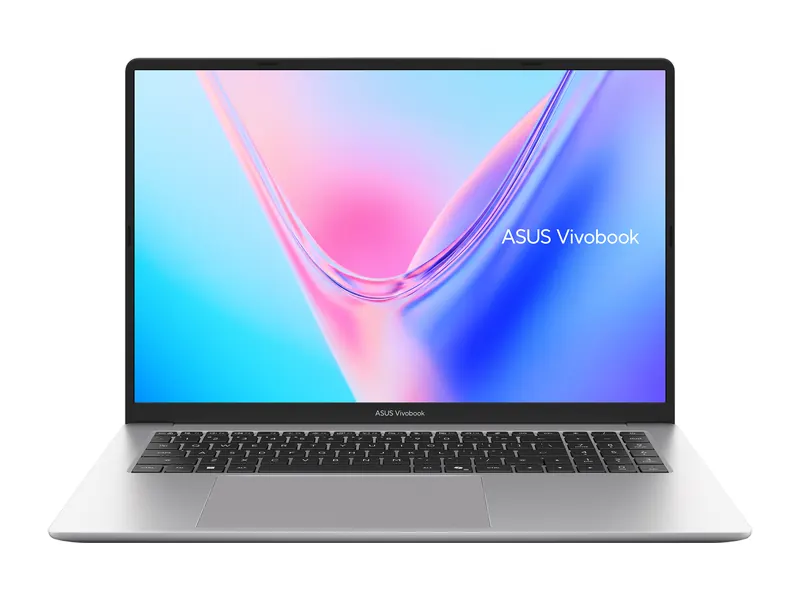
The Radeon 780M is about as good as integrated graphics get in India. It plays Valorant, CS2 and older AAA games at 720p to 1080p on low, edits 1080p video comfortably and needs no separate graphics card. The catch is 8GB of soldered memory shared with the graphics, so heavy multitasking and newer games are a stretch. Choose it if gaming is occasional.
- Graphics
- AMD Radeon 780M (integrated)
- Processor
- AMD Ryzen 7 7840HS, 8 cores/16 threads (up to 5.1GHz)
- Memory
- 8GB LPDDR5X (soldered, max 8GB)
- Storage
- 512GB SSD
- Display
- 16-inch WUXGA (1920×1200), 60Hz, 300 nits, 45% NTSC
- Weight
- 1.85 kg
ASUS TUF Gaming A15 (Ryzen 7 7445HS, RTX 3050 4GB)
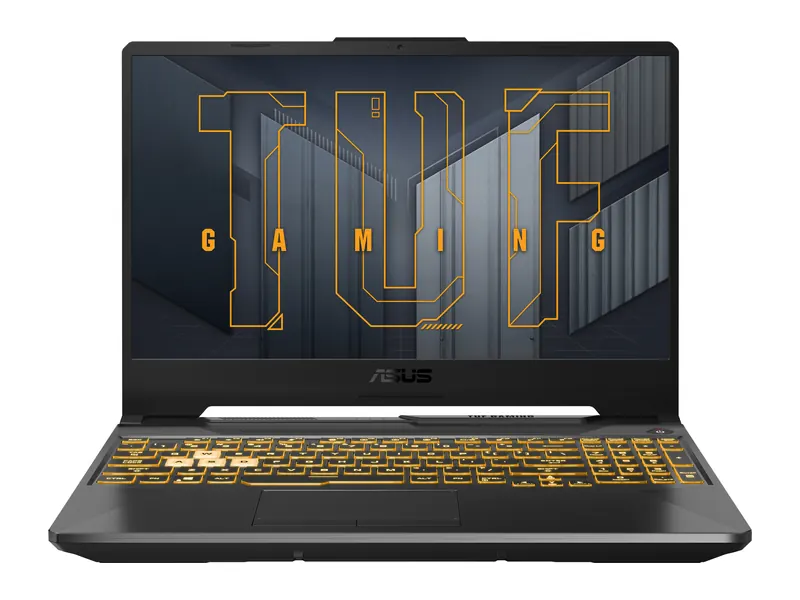
The simplest step up from integrated graphics. The RTX 3050 runs most AAA games at 1080p low to medium with DLSS, and ASUS lists a 75W power limit, which is near the top for this chip. It is heavy at 2.3kg and the screen is dim, but frame rates per rupee are excellent.
- Graphics
- NVIDIA GeForce RTX 3050 4GB, 75W TGP
- Processor
- AMD Ryzen 7 7445HS (6 cores, 12 threads, up to 4.7 GHz)
- Memory
- 16GB DDR5 (upgradable to 64GB)
- Storage
- 512GB PCIe 4.0 NVMe SSD
- Display
- 15.6" FHD, 144Hz, 250 nits, anti-glare
- Weight
- 2.3 kg
Lenovo LOQ Essential (Ryzen 5 7535HS, RTX 3050 6GB)
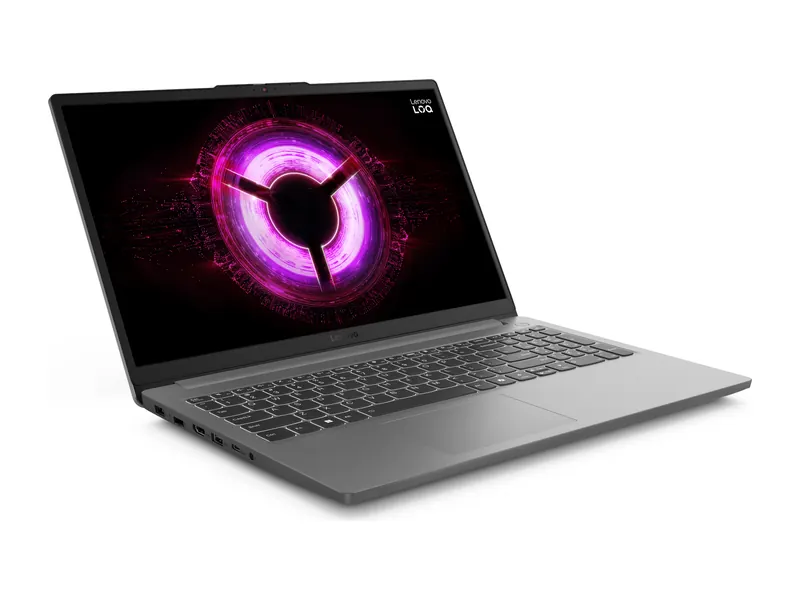
The 6GB RTX 3050 has 50 per cent more video memory than the 4GB version, which matters in newer games and video editing timelines. Add a colour-accurate 100% sRGB 144Hz panel, a spare M.2 slot and a light 1.8kg body. Stock was down to the last unit when we checked, so confirm availability.
- Graphics
- NVIDIA GeForce RTX 3050 6GB, 65W TGP
- Processor
- AMD Ryzen 5 7535HS (6 cores, 12 threads, up to 4.55 GHz)
- Memory
- 16GB DDR5-4800 (1x16GB)
- Storage
- 512GB PCIe 4.0 NVMe SSD (second M.2 slot)
- Display
- 15.6" FHD IPS, 144Hz, 300 nits, 100% sRGB
- Weight
- 1.8 kg
HP Victus 15 (Core i5-13450HX, RTX 4050, 16GB/512GB)
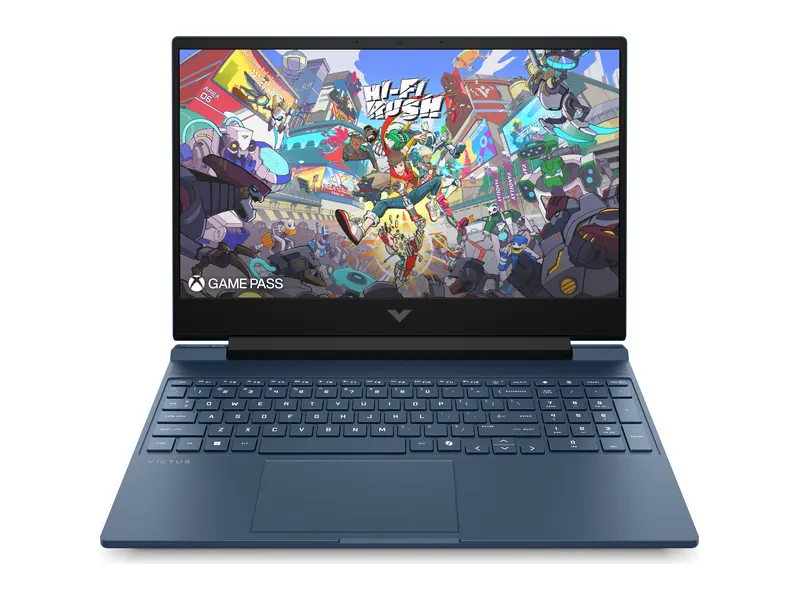
An RTX 4050 with DLSS 3 frame generation plus a 10-core HX processor makes this the point where dedicated graphics stop feeling like a compromise. It plays nearly every current game at 1080p medium to high and handles 4K editing in Premiere Pro and DaVinci Resolve. The panel is a gaming screen rather than a colour-accurate one.
- Graphics
- NVIDIA GeForce RTX 4050 6GB
- Processor
- Intel Core i5-13450HX (10 cores/16 threads, up to 4.6GHz)
- Memory
- 16GB DDR5-5600 (2x 8GB)
- Storage
- 512GB PCIe Gen4 NVMe SSD
- Display
- 15.6-inch FHD (1920×1080) IPS, 144Hz, 300 nits, 62.5% sRGB
- Weight
- 2.29 kg
Integrated vs dedicated graphics for gaming

Gaming is where the integrated vs dedicated graphics gap is widest. As a rough guide at 1080p:
- Basic Intel or AMD integrated graphics: Minecraft, Roblox, older esports titles at low settings.
- Radeon 780M or Intel Arc integrated: Valorant, CS2, Fortnite and GTA V at low to medium, often above 60 fps in esports.
- RTX 3050: most AAA games at low to medium, esports at high refresh rates.
- RTX 4050 and RTX 4060: nearly everything at medium to high, with DLSS frame generation.
If you want to play new releases such as Cyberpunk 2077 or Black Myth: Wukong, integrated graphics are not enough. Start at the RTX 3050 and see our best gaming laptops under ₹1 lakh for verified picks.
Integrated vs dedicated graphics for video and photo editing
For editors, integrated vs dedicated graphics depends on the media. Photo editing in Lightroom and Photoshop runs well on modern integrated graphics, especially with 16GB of RAM. Video is different. Integrated graphics can cut 1080p footage, but timelines stutter with effects, colour grading and 4K files, and exports take much longer.
A dedicated NVIDIA GPU speeds up exports through NVENC and accelerates effects in Premiere Pro and DaVinci Resolve. For regular 4K work, aim for an RTX 4050 or better with 6GB or more of VRAM. Light YouTubers who edit 1080p a few times a month can stay on integrated graphics.
Integrated vs dedicated graphics for coding, AI and CAD
For most coders, integrated vs dedicated graphics barely matters. Web, app, Python and Java development do not use the graphics chip, so integrated graphics are fine. The exceptions:
- Machine learning and local AI models: most tools expect NVIDIA CUDA, so a dedicated RTX GPU with 6GB to 8GB VRAM is strongly recommended.
- Game development: Unity and Unreal Engine need a dedicated GPU to preview scenes smoothly.
- CAD and 3D modelling: AutoCAD 2D works on integrated graphics; SolidWorks, Revit and Blender benefit greatly from a dedicated card.
Engineering and computer science students should check our best laptops for students in India guide, which matches the GPU to each course.
Battery life, heat and weight
This is the hidden side of the integrated vs dedicated graphics decision. A thin laptop with integrated graphics often weighs 1.3kg to 1.7kg and can last 8 to 12 hours of office work. A laptop with a dedicated graphics card usually weighs 1.8kg to 2.5kg, needs a large power brick and lasts 4 to 7 hours on light work, far less while gaming.
Gaming laptops use NVIDIA Optimus or Advanced Optimus to switch to the integrated graphics when you are on battery, so they are not as bad as their specs suggest. But if you carry the laptop all day, the weight and charger matter more than benchmark scores.
How much more does a dedicated graphics card cost?
In India today, laptops with a dedicated RTX graphics card start around ₹60,000 to ₹70,000 for an RTX 2050 or 3050 and around ₹80,000 to ₹95,000 for better-built RTX 3050 models. RTX 4050 laptops sit around ₹85,000 to ₹1.15 lakh, and RTX 4060 starts close to ₹1 lakh.
At the same price, an integrated-graphics laptop usually gives you a better screen, more RAM, a lighter body or a faster processor. That is the real integrated vs dedicated graphics trade: you pay for gaming and creative performance with everything else. Our laptop buying guide for India shows how to balance the budget.
How to check if a laptop has a dedicated graphics card
Spec sheets can blur integrated vs dedicated graphics. Here is how to tell integrated from dedicated graphics:
- Look for a separate GPU name: "NVIDIA GeForce RTX 4050 6GB" is dedicated. "AMD Radeon Graphics", "Intel Iris Xe" or "Intel Graphics" are integrated.
- Look for VRAM: a figure like "4GB GDDR6" next to the graphics means dedicated memory.
- Beware "shared" memory: listings that say "up to 8GB graphics memory" usually mean integrated graphics borrowing RAM.
- On a Windows laptop you already own: open Task Manager, go to Performance and look for GPU 0 and GPU 1. Two GPUs means you have both.
If you go dedicated: VRAM and TGP matter
Once you settle integrated vs dedicated graphics, remember that not all dedicated graphics are equal. Two numbers decide how fast a laptop GPU really is:
- VRAM: 4GB is the minimum for gaming; 6GB to 8GB is better for new games and video editing.
- TGP (power): the same RTX 4050 can run at 35W in a thin laptop or 140W in a gaming laptop. Higher TGP means higher frame rates.
Our laptop graphics card list ranks every laptop GPU into tiers and explains TGP, VRAM and MUX switches in more depth.
Integrated vs dedicated graphics: which should you buy?
Use this checklist to settle the integrated vs dedicated graphics question for yourself:
- Choose integrated if you value battery life, low weight and a lower price, and your heaviest task is Office, coding, browsing or 1080p streaming.
- Choose strong integrated (Radeon 780M or Intel Arc) if you want occasional esports gaming without the weight. ASUS Vivobook 16 (Radeon 780M) is our example.
- Choose an entry dedicated GPU if you want to play most games at 1080p on a budget: ASUS TUF A15 (RTX 3050 4GB) or Lenovo LOQ Essential (RTX 3050 6GB).
- Choose an RTX 4050 or better for serious gaming, 4K editing or AI work: HP Victus 15 (RTX 4050).
Still deciding on the processor too? Our Ryzen 5 vs i5 comparison pairs well with this guide.
Frequently asked questions
Is integrated graphics good enough for a laptop?
For study, office work, coding, browsing and streaming, yes; that is where integrated wins the integrated vs dedicated graphics choice. Modern integrated graphics also handle photo editing and light esports games. You need dedicated graphics only for modern games, heavy video editing, 3D or AI work.
Can integrated graphics run games?
Yes, lighter ones. AMD Radeon 780M and Intel Arc integrated graphics run Valorant, CS2, Fortnite and GTA V at low to medium settings. New AAA games need a dedicated GPU.
Does a dedicated graphics card drain the battery?
Yes, under load. Most laptops switch to integrated graphics when you are not gaming, but a gaming laptop still usually lasts 4 to 7 hours on light work versus 8 to 12 on a thin integrated laptop.
Can I add a dedicated graphics card to my laptop later?
No. Laptop GPUs are soldered to the motherboard. External GPU enclosures exist but are expensive and need Thunderbolt, so choose the right graphics when you buy.
Is the RTX 3050 much better than integrated graphics?
Yes. An RTX 3050 is several times faster than most integrated graphics in games and adds NVIDIA features such as DLSS and NVENC. Even the Radeon 780M is well behind it in modern titles.
How much VRAM do I need in a laptop?
At least 4GB for gaming at 1080p, and 6GB to 8GB for newer games, 4K video editing and AI tools.
The final word
The integrated vs dedicated graphics card in laptop decision comes down to your heaviest task. Integrated graphics give you a cheaper, lighter laptop with better battery life and are all most students and office users need. A dedicated graphics card is essential for modern games, serious video editing, 3D and AI work.
If you are unsure, start with what you will run in the next two years and buy for that. For full GPU tiers see our laptop graphics card list, and for verified gaming picks at every price see our gaming laptop guides.
Last updated on . Specifications, stock and prices change frequently. Always check the live listing before you buy.
More buying guides

Best gaming laptops under ₹70,000
Best gaming laptop under 70000 in India: 5 verified in-stock picks with Radeon 780M, Intel Arc and Radeon 660M graphics, what each can play, and upgrade tips.
Read guide →
Best gaming laptops under ₹1 lakh
Best gaming laptop under 1 lakh in India: 7 RTX picks from Lenovo LOQ, Acer, ASUS TUF, MSI and Dell, with verified GPU wattage, specs and honest advice.
Read guide →
Best gaming laptops under ₹1.5 lakh
Best gaming laptop under 1.5 lakh in India: 7 RTX 5050, RTX 4060 and RTX 4050 picks compared on verified specs, GPU wattage, battery and honest trade-offs.
Read guide →